
Roof Insurance Claims in Georgia
Expert Documentation and Support Through Every Stage of Your Roofing Insurance Claim
Certified by Industry-Leading Manufacturers
How 1 Source Roofing Helps Georgia Homeowners Document Roof Damage
Filing a roofing insurance claim in Georgia is not as simple as calling your insurance company and waiting for a check. The process involves inspections, documentation, adjuster meetings, scope-of-loss reviews, supplements, and sometimes appeals or appraisals. Every step has rules, deadlines, and financial implications that most homeowners encounter once or twice in a lifetime but that insurance companies navigate thousands of times per year.
That imbalance is the core problem. Your insurance company has adjusters, estimators, engineers, and attorneys familiar with every claim. Most homeowners have a phone number and a policy they have never read. The result is predictable: claims paid on incomplete scopes, missed line items, undergraded materials, and estimates that leave homeowners covering thousands of dollars out of pocket that their policy should have handled.
1 Source Roofing and Restoration exists to close that gap with thorough documentation. We have documented and restored more than 500 storm-damaged roofs across metro Atlanta since 2015. We know how adjusters inspect roofs, how Xactimate pricing works, what line items get left out of first-pass scopes, and how to prepare supplemental documentation that clearly shows the full extent of the damage. We attend every adjuster meeting in person and walk the roof alongside the adjuster to show the documented damage so nothing gets missed.
Our insurance documentation process starts with a free roof inspection. We document every damage point with photographs and measurements before the adjuster ever arrives. That documentation becomes the foundation of your claim. If the adjuster's scope comes back short, we have the evidence ready to prepare a supplement for your insurer to review rather than starting from scratch.
We do not charge homeowners for any of this. The free inspection, the adjuster meeting attendance, the scope review, the supplemental documentation — none of it costs you a dollar. If your claim is approved and you choose us to install the roof, the insurance company pays us directly based on the approved scope. You pay your deductible and nothing more. If the damage does not justify a claim, we tell you that too. We would rather give you an honest answer than push a claim that does not make financial sense.
This hub page connects you to every insurance claims resource we have built for Georgia homeowners. Whether you are filing your first claim, preparing for an adjuster meeting, appealing a denial, or deciding between insurance and out-of-pocket, the guides below walk you through each scenario with the same level of detail we bring to every roof we document and restore.
The 1 Source Insurance Documentation Process
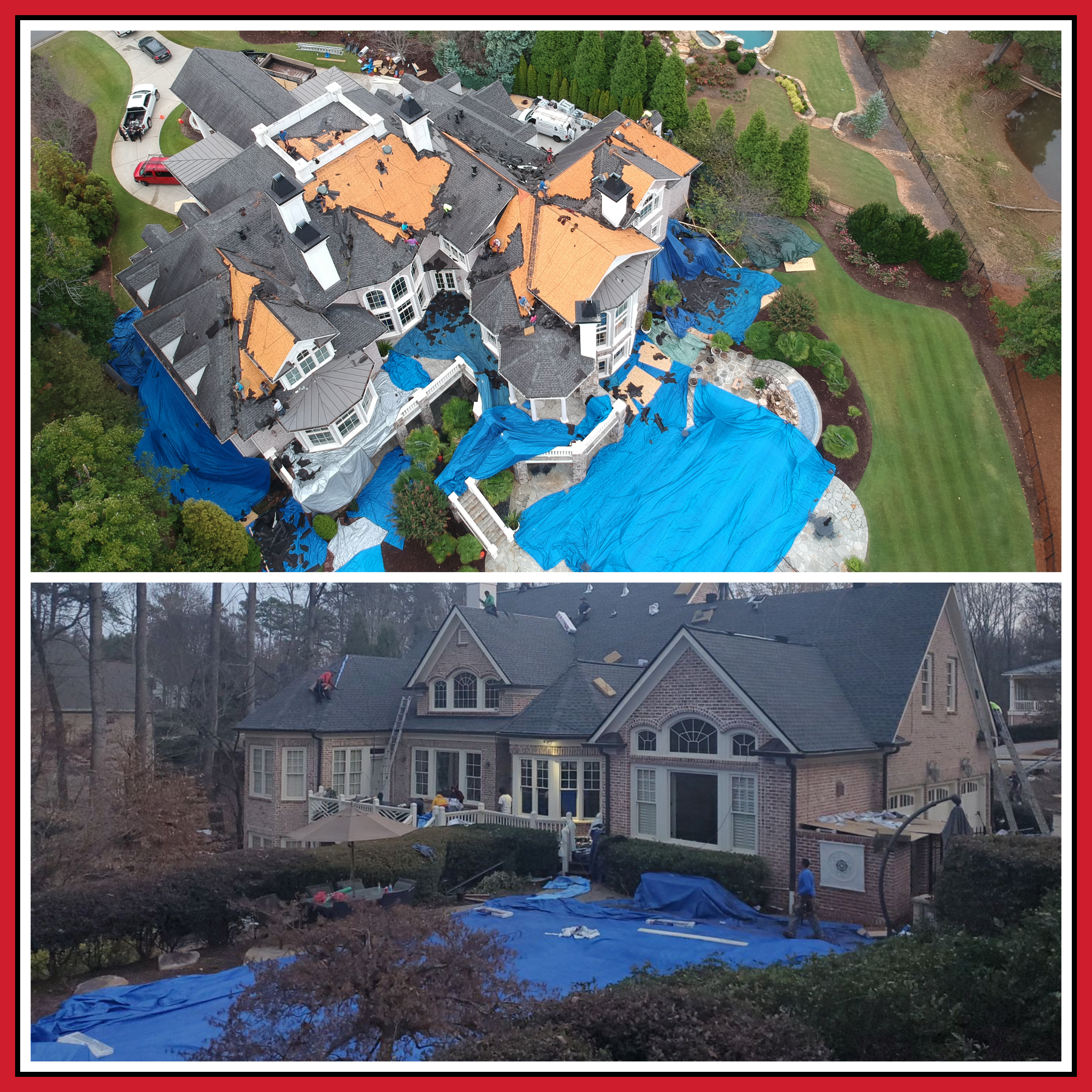
Every roof we document follows the same proven five-step process. We have refined this approach over hundreds of storm-damaged roofs across Alpharetta, Buckhead, Johns Creek, Marietta, Roswell, Sandy Springs, and every neighborhood within 30 miles of Atlanta. Each step builds on the one before it, and we handle the documentation and restoration at every stage.
Step 1: Free roof inspection and damage documentation. We send a certified inspector to your property at no charge. The inspector examines every slope of your roof, checks flashing details around chimneys and walls, inspects gutters for granule accumulation, and photographs every damage point. We measure each roof section and note the shingle type, age, and condition. This documentation package becomes the foundation of your claim — the objective evidence that existed before the insurance company sent their adjuster.
Step 2: Claim filing guidance. We walk you through the process of calling your insurance company and reporting the damage. We help you identify the right information to provide — the date of the storm event, the type of damage observed, and whether interior damage is present. We never file the claim on your behalf because the policyholder must initiate and control the claim directly, but we make sure you know exactly what to say and what to expect next.
Step 3: Adjuster meeting support. When the insurance adjuster comes to inspect your roof, we are there. We arrive 30 minutes early to brief you on the process. We walk the roof alongside the adjuster, show the documented damage they might otherwise miss, discuss material grades and labor pricing in Xactimate terminology, and help ensure the scope of loss reflects the actual condition of your roof. This single meeting informs the dollar value of your claim, and having a GAF Certified contractor present to show the damage makes a real difference.
Step 4: Scope-of-loss review and supplemental documentation. After the adjuster submits their scope, we review every line item against our own documentation. If the scope is missing items, underpricing labor, or specifying materials below what is actually installed on your roof, we prepare detailed supplemental documentation with supporting evidence and submit it for your insurer to review. Most first-pass scopes leave items out. We back every supplement with photographic evidence, measurements, and manufacturer specifications so your insurer has the full picture.
Step 5: Roof installation and final payment. Once the claim is fully approved, we schedule your roof installation. We handle material ordering, crew coordination, permit filing if required, and final inspection. The insurance company issues payment based on the approved scope. You pay your deductible directly to us. The entire process — from your first call to a completed roof — typically takes 30 to 60 days for straightforward claims and 90 to 120 days for claims that require supplements or appeals.
Comprehensive Guides for Every Stage of Your Roofing Claim
We have written detailed guides for each phase of the roofing insurance claim process. Each guide covers one specific topic in depth — real scenarios, actual Xactimate terminology, Georgia-specific deadlines, and the exact steps we take when documenting roofs for our clients. Select the guide that matches where you are in the process.
Meeting Your Insurance Adjuster
What happens during the adjuster inspection, why having your contractor present to show the documented damage changes the outcome, and how thorough documentation protects your claim value from the moment the adjuster steps onto your roof.
When Your Claim Gets Denied
Your rights under Georgia law when a roofing claim is denied. Re-inspection requests, the appraisal clause, appeals processes, and how stronger documentation can help your insurer reconsider a denial.
Insurance vs. Out-of-Pocket
When filing a claim makes financial sense and when paying out of pocket is the smarter decision. Deductible math, premium impact, and honest assessments for your specific situation.
Supplemental Claims
How we document the line items the adjuster missed. Why first-pass scopes almost always leave items out and how supplemental documentation helps your insurer see the full extent of the damage.
Storm Damage Claims in Atlanta
Hail and wind damage documentation specific to metro Atlanta storms. NOAA storm data, damage pattern identification, and the filing process for weather-related claims across Georgia.
Complete Insurance Claim Filing Guide
Our full step-by-step walkthrough for filing a roofing insurance claim in Georgia. Timelines, deadlines, required documentation, and what to expect at each stage of the process.
Not Sure Where to Start With Your Claim?
Call us for a free roof inspection. We will assess the damage, tell you whether a claim makes sense, and walk you through the next steps. No pressure, no obligation, no charge.
Call (404) 277-1377 — Free Roof InspectionInsurance Claims for Water Damage to Your Home
Water damage claims follow different rules than standard roofing claims. Coverage depends on the source of the water, the timing of the damage, and whether the intrusion was sudden or gradual. A burst pipe during a freeze is typically covered. A slow leak that developed over months may be excluded. Emergency tarping after a storm falls under different provisions than the roof repair itself.
We have built a complete library of water damage insurance guides to help Georgia homeowners understand what their policy covers, how to document water damage correctly, and how to navigate the claims process when water is involved. Each guide addresses a specific aspect of water damage claims with the same depth and detail we bring to our roofing guides.
Water Damage Adjuster Meeting
How to prepare for the adjuster inspection when water damage is involved. What they look for, what documentation strengthens your claim, and why moisture readings matter.
Documenting Water Damage
Proper documentation methods for water intrusion — photographs, moisture meter readings, timelines, and the evidence chain that supports a successful water damage claim.
Emergency Tarping Coverage
What your insurance policy covers for emergency roof tarping after storm damage. Temporary repair provisions, coverage limits, and how to get reimbursed for emergency measures.
Filing a Water Damage Claim
Step-by-step instructions for filing a water damage claim with your insurance company. Reporting requirements, deadlines, and the information you need before you call.
Out-of-Pocket vs. Claim for Water Damage
When filing a water damage claim is worth it and when the repair cost falls below your deductible threshold. Financial analysis to help you make the right decision.
Supplementing Water Damage Claims
Hidden water damage discovered after the initial scope. How supplements work for water intrusion, mold remediation, and structural repairs the adjuster could not see during the first inspection.
Water Damage Claim Denied
Common reasons water damage claims get denied in Georgia — gradual damage exclusions, maintenance clauses, and flood exclusions. Your options for appeal and how to build a stronger case.
What Insurance Covers for Water Damage
A breakdown of standard homeowner policy coverage for water damage in Georgia. What is covered, what is excluded, and where the gray areas create disputes between homeowners and carriers.
Insurance Claim Documentation Across Metro Atlanta
We document and restore storm-damaged roofs for homeowners throughout the Atlanta metropolitan area. Each city page below covers the specific storm patterns, common insurance carriers, typical claim values, and neighborhood-level considerations for that community. Whether you are in a historic Buckhead estate or a newer subdivision in Johns Creek, the claims process has local nuances that matter.
What Georgia Homeowners Need to Know About Roof Insurance
Georgia's insurance regulations provide specific protections and deadlines that affect every roofing claim. Understanding these rules puts you in a stronger position when dealing with your insurance company — and prevents you from accidentally forfeiting your rights through missed deadlines or procedural errors.
The right to have your contractor present. Georgia law does not restrict your right to have a contractor present during the adjuster inspection. This is not a courtesy — it is your right as a policyholder. The adjuster cannot refuse entry to your contractor, cannot require your contractor to leave the roof, and cannot prevent your contractor from showing and discussing the damage. Exercise this right on every claim. The difference between a claim where your contractor shows the documented damage and one without can be thousands of dollars.
Time limits for filing. Most Georgia homeowner policies require you to report damage within a reasonable time after discovery. The standard window is one to two years from the date of the storm event, but some policies have shorter reporting periods. Waiting too long to file creates a presumption that the damage was caused by something other than the storm you are claiming. File promptly. If you are not sure whether the damage justifies a claim, call us for a free inspection. We will give you a straight answer within 24 hours.
The appraisal clause. Nearly every homeowner policy in Georgia includes an appraisal clause that either party can invoke when there is a dispute over the amount of damage. Appraisal is not arbitration — it addresses the dollar amount, not whether the damage is covered. Each side appoints an appraiser, and if the two appraisers cannot agree, they select an umpire whose decision is binding. This process often resolves underpayment disputes without litigation.
Replacement Cost vs. Actual Cash Value. Georgia policies are written as either Replacement Cost Value (RCV) or Actual Cash Value (ACV). RCV policies pay to replace your roof with equivalent materials at current prices. ACV policies deduct depreciation — the older your roof, the less they pay. If you have an RCV policy, the insurance company typically pays the ACV amount first and releases the depreciation holdback after the work is completed. Understanding which type of policy you have changes the entire financial calculation of your claim.
Anti-fraud provisions. Georgia law makes it illegal for any contractor to waive, absorb, or pay your deductible. Your deductible is your financial responsibility under the policy. Any contractor who offers to waive your deductible is committing insurance fraud under Georgia statute O.C.G.A. 33-6-4, and the claim itself can be voided. We never waive deductibles. We never ask you to sign over your insurance check. We work within the approved scope and the law.
Five Reasons Georgia Homeowners Leave Money on the Table
After documenting and restoring more than 500 storm-damaged roofs across metro Atlanta, we see the same mistakes over and over. These are not complicated errors. They are simple oversights that cost homeowners thousands of dollars — and they are entirely preventable.
1. No contractor at the adjuster meeting. The adjuster works for the insurance company. Their training, their protocols, and their incentives all point toward conservative scopes. When no contractor is present to walk the roof with the adjuster and show the documented damage, items get missed. Shingles with creased granule displacement from hail impact look intact to an untrained eye. Wind-lifted shingles that have re-sealed lay flat and appear undamaged. A contractor who inspects roofs every day catches what the adjuster's protocol does not require them to look for.
2. Accepting the first scope without review. The first scope of loss is a starting point, not a final figure. Most adjusters follow a checklist and work quickly — especially during storm surges when they are handling dozens of claims per week. Line items get omitted. Material grades get defaulted to the cheapest option. Labor rates get set below market. Homeowners who accept the first scope without having a contractor review it can leave an average of 15 to 30 percent of their documented damage off the record.
3. Waiting too long to file. Every week you delay filing weakens your claim. Shingles shift. Water intrusion causes secondary damage that the insurance company will argue was caused by neglect rather than the storm. The gap between the storm date and the filing date becomes a weapon the adjuster uses to question causation. File within 30 days of the storm event whenever possible.
4. Making repairs before documentation. Temporary repairs to prevent further damage are fine — and encouraged by your policy. Full repairs before the adjuster inspects are a problem. Once the damaged materials are removed, the adjuster cannot see them. They cannot document what is no longer there. If you need to make emergency repairs, photograph everything before you touch it and keep the damaged materials for the adjuster to examine.
5. Not understanding their policy type. The difference between an RCV policy and an ACV policy changes the financial outcome of your claim by thousands of dollars. Homeowners with ACV policies who assume they will receive full replacement cost are shocked when the check arrives. Homeowners with RCV policies who do not complete the repairs forfeit the depreciation holdback — often 20 to 40 percent of the total claim. Know your policy type before you file. We review your policy with you during the free inspection.
More From 1 Source Roofing and Restoration
Insurance claim documentation is one part of what we do. Explore our other services and resource hubs to see the full scope of how we serve metro Atlanta homeowners.
Insurance Claims Assistance — Service Page
Our dedicated service page covering the full insurance claim documentation program. How we coordinate with your carrier, organize the documentation, and restore your roof to the coverage your policy provides.
Storm Damage Restoration
Hail, wind, fallen trees, and severe weather. Our storm damage restoration service covers emergency response, damage assessment, insurance coordination, and complete roof replacement.
Water Damage Resource Hub
The complete guide to water damage restoration — from emergency tarping and interior water extraction to insurance claim filing and structural drying.
Roof Replacement
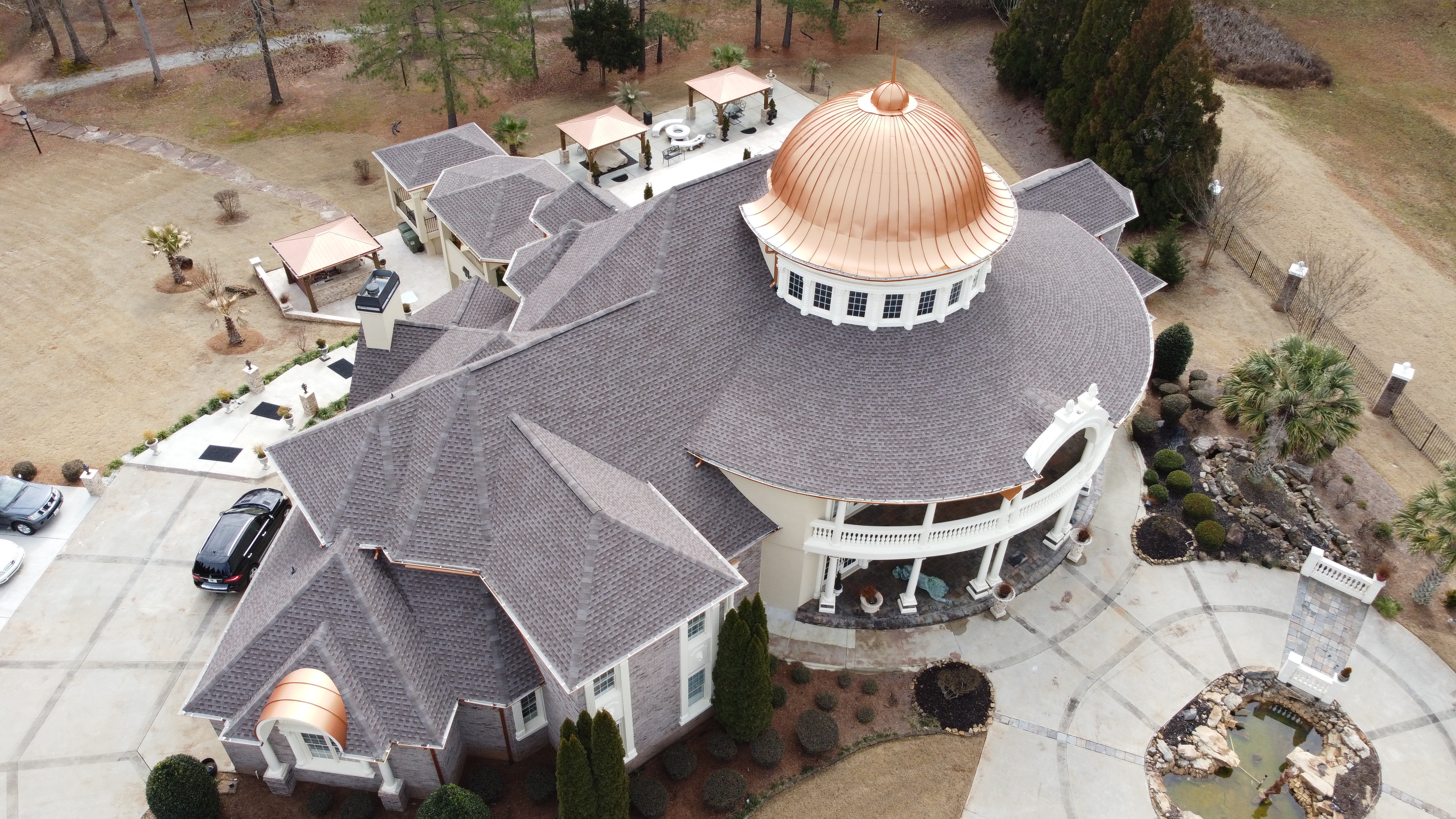
Full tear-off and replacement with GAF and CertainTeed products. Manufacturer-backed warranties, certified installation crews, and premium materials for every project.
Roof Repair
Targeted repairs for leaks, damaged flashing, missing shingles, and localized storm damage. When a full replacement is not necessary, we fix what needs fixing and leave the rest alone.
Insurance Claims Questions — Answered
Straight answers from contractors who document storm-damaged roofs every week across metro Atlanta
How do I file a roofing insurance claim in Georgia?
Start by calling your insurance company's claims line — the number is on the back of your insurance card or on your declarations page. Report the date and type of damage (hail, wind, fallen tree, water intrusion). They will assign a claim number and schedule an adjuster inspection, usually within 5 to 14 days. Before the adjuster arrives, call a roofing contractor experienced in documenting storm damage. We inspect your roof at no charge, document the damage with photos and measurements, and meet the adjuster on site to show the documented damage so nothing gets missed.
Does 1 Source charge for insurance claim documentation?
No. We inspect your roof for free, attend the adjuster meeting at no cost, and review the scope of loss at no charge. If your claim is approved and you choose us to install the roof, the insurance company pays us directly based on the approved scope. You pay your deductible. That is it. There is no upfront cost and no hidden fee for claim documentation.
What happens if my roof insurance claim gets denied?
A denial is not the end of the road. Georgia law gives you the right to request a re-inspection by a different adjuster. You can also invoke the appraisal clause in your policy, which brings in an independent umpire to evaluate the damage. We support homeowners through the appeals process — gathering additional documentation, preparing supplemental documentation, and coordinating re-inspections. Many denied claims are reconsidered when the right contractor presents the right evidence to the insurer.
Should my contractor be present for the adjuster meeting?
Absolutely. Having your contractor present when the adjuster inspects your roof is one of the most effective things you can do to make sure your damage is fully documented. The contractor knows where the damage is, can point out items the adjuster might miss, and speaks the same Xactimate language the adjuster uses. We attend every adjuster meeting for our clients and walk the roof alongside the adjuster to show that every damage point is documented.
What is a supplemental insurance claim?
A supplement is additional documentation submitted to the insurance company for damage or work beyond the original scope of loss. Supplements come up when the adjuster missed damage, undergraded materials, underpriced labor, or when hidden damage is discovered during the tear-off. Most roofing insurance claims involve at least one supplement. We prepare and submit supplemental documentation with detailed evidence — photos, measurements, and Xactimate line items — for your insurer to review.
How long does a roofing insurance claim take from start to finish?
A straightforward claim with no disputes typically takes 30 to 60 days from the date you file to the date your new roof is installed. The adjuster inspection is usually scheduled within 5 to 14 days. The scope of loss comes back 7 to 21 days after the inspection. Material ordering takes 3 to 7 days. Installation takes 1 to 3 days depending on roof size. Claims with supplements or disputes can take 90 to 120 days. We keep your documentation organized throughout so you always know where your claim stands.
Should I file an insurance claim or pay out of pocket?
It depends on your deductible, the extent of the damage, and your policy type. If your deductible is 2,500 dollars and the repair costs 3,000 dollars, filing a claim for 500 dollars in net benefit rarely makes sense — the claim goes on your record and could affect future premiums. If the damage exceeds 8,000 to 10,000 dollars, filing is almost always the right move. We provide free inspections and honest assessments. If the damage does not justify a claim, we will tell you.
Does filing a roof insurance claim raise my premiums?
Georgia does not prohibit insurers from raising premiums after a claim, but most carriers treat storm damage claims differently from liability claims. A single weather-related claim is unlikely to trigger a significant increase. Multiple claims within a 3-to-5-year window may lead to non-renewal or a rate adjustment. The key factor is the cause — catastrophic storm events that affect entire neighborhoods are typically treated more favorably than isolated incidents. We help you weigh the financial decision before you file.
Your Roof Has Damage. Your Policy Has Coverage. Let Us Document the Connection.
Call us for a free roof inspection. We document the damage, attend the adjuster meeting to show what we found, review the scope, prepare supplemental documentation when needed, and install your new roof. One call puts a GAF Certified contractor on your roof from day one.
Call (404) 277-1377 — Free Inspection & Claim ConsultationWe are a roofing contractor, not a public adjuster. 1 Source Roofing and Restoration is a licensed Georgia roofing contractor. We inspect roofs, document damage, provide repair estimates, and perform roof restoration. We do not adjust, negotiate, or settle insurance claims on a homeowner's behalf — under Georgia law (O.C.G.A. § 33-23), only a licensed public adjuster may do that for compensation. You file and control your own claim, and your insurer determines coverage. If your claim calls for professional adjusting or formal dispute resolution, we are glad to refer you to a licensed Georgia public adjuster.